At this time of year my thoughts turn to ribs.

Not my ribs! With the warmer weather coming to the UK, but still a hint of winter in the air, for me pork ribs in a good sauce bridges across the seasons and leads me to outdoor cooking in the months to come.

Here is my idea for ribs in a sauce but be warned, it is sweet and sugary so take it easy on the sauce and make it as a treat rather than an everyday meal. Here are the ingredients for the rib sauce:

image

Any extra virgin oil (rapeseed here, but make your own choice) , vinegar (I like coconut palm vinegar for flavour) , the most important ingredient, home made chutney from fruit and vegetables grown in the garden (this has the sugar content) and finally some salt. Make a liquid marinade from the ingredients as you see fit and coat the ribs. Leave to marinade for 2 hours or overnight in the refrigerator.

image

When you are ready to cook the ribs, put them in a dish or tray, cover and cook in a hot oven for 30 minutes then turn it down and cook moderate for 90 minutes. After 2 hours it will be a wet mess and you need to dry it out and caramelise the sugar. So, spread the racks out on a tray and cover with the wet marinade from the cooking tray. Turn the oven up and drive the water off and crisp up the ribs in 30 to 40 minutes.

Get a load of tissues, finger bowls, some coleslaw and salad leaves, get messy and eat primal.

image

Primal Blueprint Key Concept Number 7

“Exercise is Ineffective for Weight Management”

Exercise is ineffective
Finally, some in the medical profession have put their heads above the parapet and said some things that they haven’t dared to do for a long time. My reading of what they say is this:

  • A calorie is not is calorie wherever you get it from. Different calories have different effects.
  • Sugar is sugar whatever it is packaged in or sold as.
  • The human body is designed through millions of years of evolution to store and burn fat as its primary fuel.
  • Saturated fat is not “unhealthy” but sugar in excess leads to obesity. I believe that the optimum amount of sugar in the human diet is zero.
  • If you burn fat rather than sugar you do not need to refuel during exercise. No more “gel tyranny”.
  • The medical profession and food industry know this and have been misleading us for years.

I say: teach your body to burn fat again. Stop spending money on sugar drinks and gels and use the money you save to buy butter. I like Kerrygold as the cows are fed on grass 🙂

If you have read William Banting’s 1863 “Letter on Corpulence” you will know that his doctor also prescribed exercise to help him lose weight. What happened to Mr Banting when he exercised? He got fatter!

It’s only taken us 150 years to notice the same thing… 

And here’s a link to the original article 

BJSM

Eat colourful!

What could be more tedious than beige coloured food?

Colour is one way of estimating the nutritional value of food. On the whole, the more colour the higher the nutritional value. It doesn’t always hold true but it’s a useful rule of thumb. Just to be clear, I am talking about the natural colour of food. There is nothing remotely nutritious about bright blue cake frosting, however colourful it is!
🙂
Anyway even if it isn’t always true why eat beige when you could be eating a rainbow!

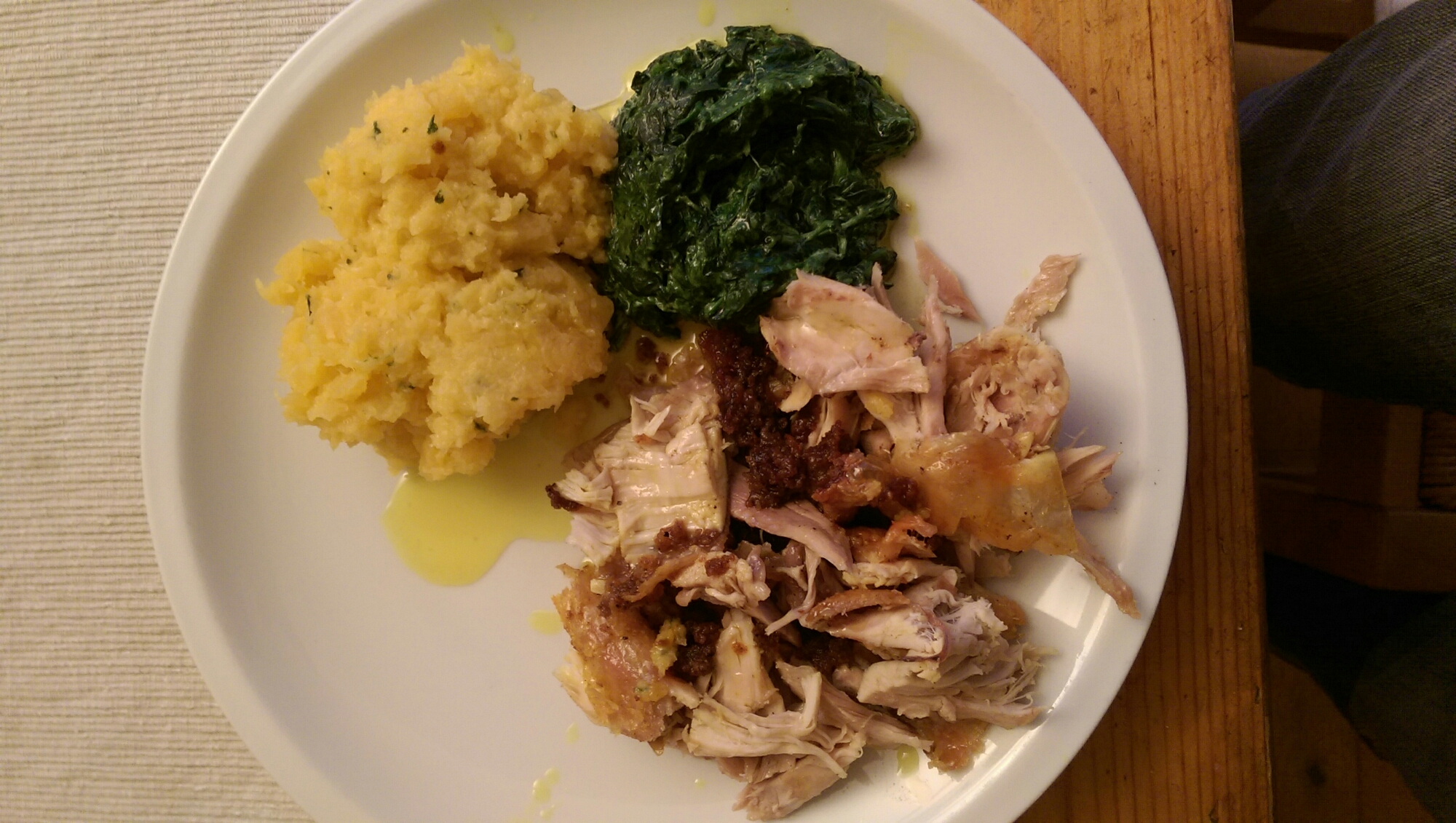
Here is my dinner from last night, chicken roasted with anti-inflammatory turmeric and cinnamon, yellow swede mashed with cream and green spinach in butter and cream with nutmeg.

Spinach can be a food of the Gods!

image

There’s more to being primal than eating primal…

Kettlebells… are they worth it?

Here’s a link to the Guardian newspaper where a reporter tried out the kettlebells in his local gym.

http://www.theguardian.com/lifeandstyle/2015/apr/04/is-it-worth-it-kettlebells

Fairly emphatically, he has decided that kettlebells are worth the effort and I couldn’t agree more! An all round exercise that can combine cardio-vascular, resistance, co-ordination and flexibility training with a single low-cost piece of equipment in a small space. And frankly, what could be more primal than picking up a heavy weight and swinging it round your head!

What’s not to like!

One thing that isn’t mentioned in the article is that, in my view, it’s always best to start with a qualified instructor. Kettlebells have a particular technique and developing a bad technique can be dangerous (for you and those around you!!) but almost worse than that, bad technique probably won’t produce the results you are looking for.

IMG_0024a

Do you Bant? 

On reading the more or less famous Pure White and Deadly by John Yudkin, I came across a reference to a TL Cleave 

http://en.m.wikipedia.org/wiki/Thomas_L._Cleave

who I mentioned in a previous post. He was a doctor in the Royal Navy and argued amongst other things that the consumption of sugar and refined carbohydrates caused a host of modern diseases that he described together as “the saccharine disease”. Saccharine in this context meaning “sugar” rather than the artificial sweetener. He argues that, in evolutionary terms, we are simply not adapted to cope with these concentrated foods and the body does not recognise what it is eating and when we have eaten enough of it or, indeed, too much. This reminded me of Melissa Hartwig’s description in It Starts With Food of sugar and refined carbohydrates as “food without brakes”. 

He says many things in his 1975 book The Saccharine Disease (I found a second hand copy on Amazon but it’s online too, link on his wiki page) that a modern day paleo person would agree with and of course some that we wouldn’t, but it set me wondering who first started this paleo thing.

My thoughts then went to William Banting who I first came across years ago when I was discovering the Atkins Diet and losing a lot of weight.

http://en.m.wikipedia.org/wiki/William_Banting

If you haven’t read his 1863  Letter on Corpulence you should give it a go. At the very least it will probably make you smile. At last week’s seminar a lady from South Africa asked me if I had heard of him. I said yes, of course. She told me that in South Africa they still had “Banting” restaurants where you could eat food based on his diet recommendations. 

Low carbohydrate living has a long and successful history that started a bit before even William Banting though. About 7 million years before… 

“I don’t have the time to eat a primal diet!”

Last night I gave a successful presentation on paleo living at Run to Live with Helen Williams of the Surrey Nutrition Clinic . The audience was mainly runners (obviously!) and there was a lot of interest in the action of insulin on the body’s energy systems. One of the issues that came up in the Q&A at the end was that eating a paleo diet would be difficult and time consuming “I just don’t have time to do all this cooking!”.

But surely if a paleo diet improves your health and extends your lifespan, then it creates time rather than consuming it? Does being paleo actually give you the time to do all the cooking? Is it really complicated?  These questions went round my head on the way home from the seminar.

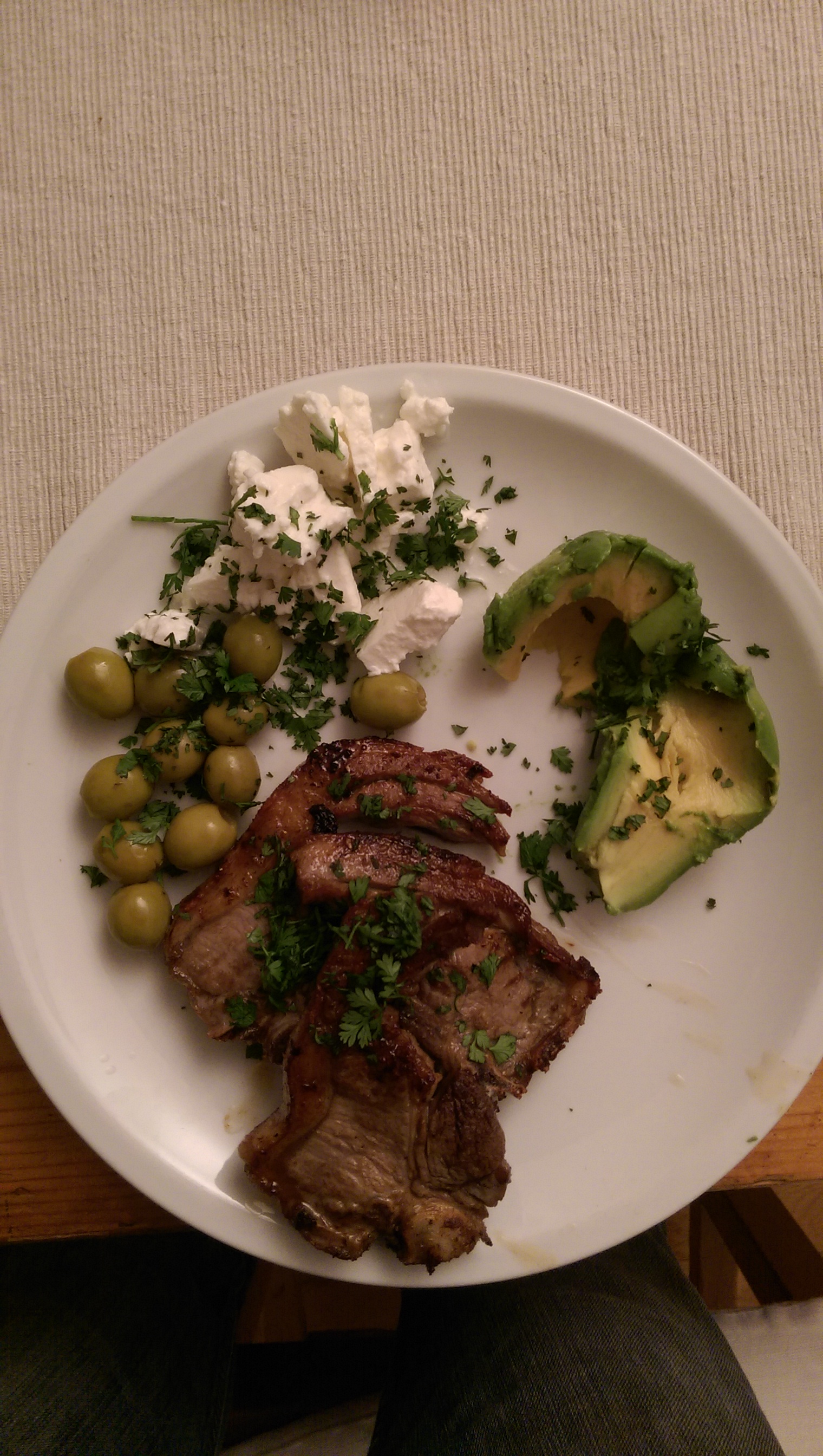
I got home at 9.30pm tired and hungry and made dinner. Grilled thin cut lamb chops, olives, feta cheese in lemon juice and avocado. I sat down to my simple flavourful dinner at 9.45pm having also prepared my lunch for the following day. Two paleo meals ready in 15 minutes.

In my view being paleo gives you more time to live, it doesn’t take it away.

image

… this survey echoes the need to urgently reduce the amount of sugary snacks and drinks…

Here as a link to the BBC report on the findings of a new survey that has “discovered” that half of the children in England, Wales and Northern Ireland have got tooth decay. I don’t know why Scotland was excluded but I doubt Scotland’s results would be any better.

http://www.bbc.co.uk/news/health-31960772

“Dr Sandra White, director of dental public health at Public Health England, said it was good news that tooth decay levels were falling and more children were brushing their teeth twice a day, but there was no room for complacency. 

Tooth decay is a serious, preventable disease and this survey echoes the need to urgently reduce the amount of sugary snacks and drinks in our children’s diets. Fluoride is indisputable in preventing tooth decay and by brushing teeth using fluoride toothpaste and also introducing water fluoridation where needed, we can significantly improve our children’s dental health.”

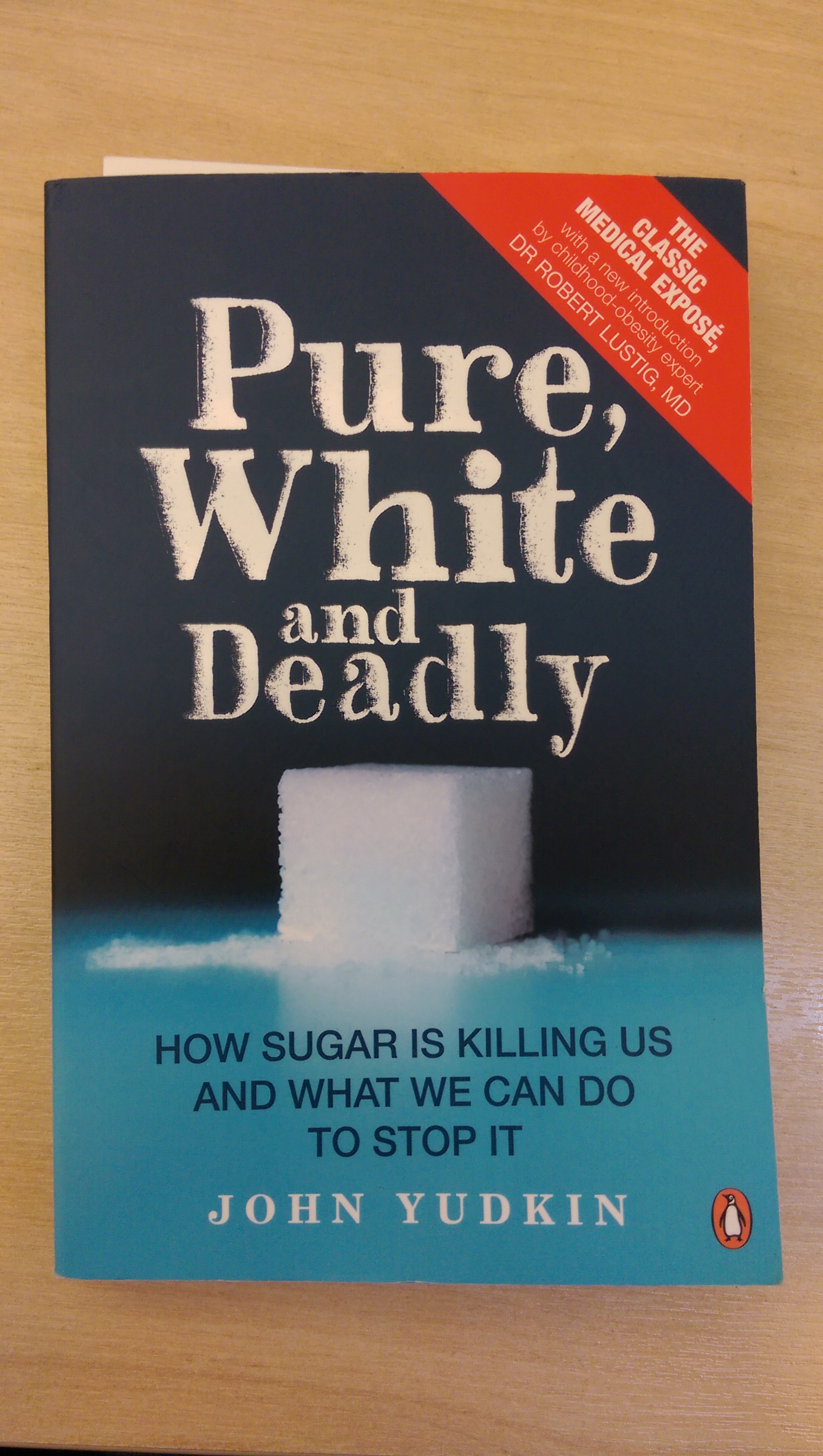
Here is the 2012 version of John Yudkin’s classic 1972 book “Pure White and Deadly” that pointed out the need urgently to reduce the amount of sugar in people’s diet to prevent amongst other things, dental caries which, he points out, is a serious but preventable disease.

IMAG0243

And here is a picture of Surgeon Captain TL Cleave who in 1966 published the book Diabetes, Coronary Thrombosis, and the Saccharine Disease in which he said this about tooth decay:

“What can, indeed, be achieved by removal of the cause in the case of the dental diseases discussed here is well seen in the two-year study, 1955-7, by G. L. Slack and W. J. Martin, in which schoolchildren were given slices of apple after meals. These children, as long as they were given the slices of apple, not only got significantly less caries than the control children did, but they got much less gum disease, too. To the purely dental result could be added the reduction in potential other disease that follows from the evidence presented in this work. It is into educative channels of this type, plus some subsidization of school tuckshops to sell fruit, nuts, raisins, etc., instead of sweets, that fluoridation costs would seem better directed.

I particularly like the comment about fluoridation.

tl cleave

Yep, definitely no room for complacency…. I am sure John Yudkin and Surgeon Captain TL Cleave would agree.

Interesting Post regarding Ketosis from Mark’s Daily Apple

http://www.marksdailyapple.com/is-constant-ketosis-necessary-or-even-desirable/#axzz3Tmp3XcS1

After approximately 13 years in almost constant ketosis (even I fall out of ketosis occasionally) I have not noticed any detrimental effects apart from that I am 13 years older than I was when I started. I suspect that may have happened anyway. Thankfully I don’t feel 13 years older 🙂

Two changes in me do make me wonder what the effects of it may be:

  • my previous, sometimes cripplingly acute, hay fever vanished almost immediately and has never returned. It has completely utterly gone and I used to get it bad!!
  • the painful, anguish inducing, acid reflux I used to get after every meal has not occurred (to the best of my memory) in 13 years.

And one change that didn’t happen was that I didn’t inherit my father’s epilepsy that appeared in him when he reached 40.

Are these three things connected with lowering systemic inflammation, an intolerance or allergy to gluten and the effect of ketosis on my brain? I don’t know. Maybe they are but in any event, my life is better with the first two and definitely without the third.

I don’t know where to begin… some of the worst advice I have ever read…

http://www.theguardian.com/lifeandstyle/the-running-blog/2015/mar/04/marathon-training-recovering-from-the-long-run

“So it is really important post-run to eat carbs, especially for those with a high glycemic index.” What she doesn’t say is that high GI foods spike your insulin levels, driving your body to convert excess carbohydrate into fat.

“Carbs initiate an insulin response, which in turn lowers your blood-sugar level by driving carbohydrate back into the muscles, where it is stored again as glycogen.” What she doesn’t say is that once the small glycogen stores are full, the remaining sugar is stored as fat.

“If you are away from home, don’t have any products handy or need to make a last-minute purchase from the petrol station on the way back from a long run, you can also make some educated choices to try to not impede your recovery. Avoid anything too high in fibre or fat, such as nuts or chocolate, as these can be slow to digest. Avoid anything that has a lot of mayonnaise or cheese in it, as it will have a high fat content. Baked crisps can be a source of carbohydrates, aren’t too high in fat and will deliver some salt, too. Low-fat flavoured milkshakes, or even a hot chocolate made with milk, may be an option if you don’t have the appetite for solid food.” What she is basically saying here is eat sugar. In my view, any advice that says “buy food from a petrol station” is wrong. Just think about that for a second… advice on buying food… from a PETROL STATION??

My advice is, become fat and keto adapted. Burn body fat during your run – you have thousands of calories of it even if you are slim. Escape the tyranny of the high carb/high insulin producing diet with its sugar rush and sugar crash, cravings for food and mood swings and you won’t need to eat the “food” you might find in a petrol station. You will do your levels of inflammation the world of good to.Â