A porchetta Christmas!

With two different work Christmas dinners to go to I should have been looking forward to trying two different celebratory meals. It turns out, however, that my colleagues organising the celebrations both had the same idea and both will take place in Jamie Oliver’s Italian restaurant 🙂 It turns out that the only thing on the Christmas menu that I find suitable for a main course is Jamie’s take on the Italian classic pork roast porchetta. Never mind, it’s one of my favourite roasts so I am happy to have it twice. Here is my butcher’s version. Pork belly rolled around a pork loin stuffed with garlic fennel and rosemary.

image

I salt the skin well and rub it in to the scoring to help the skin crisp up. It’s a large joint – this one weighed 2 kilos – and so needs slow cooking. This one took 3.5 hours.

image

Here is the finished roast. I like to strip the crispy skin off and serve it separately with the slices of full flavoured meat. Buon appetito!

Dr Robyn Toomath – a diabetes specialist and obesity campaigner – says after 14 years she has achieved nothing.

A disappointing story from New Zealand but one which the statistics would seem to bear out.
http://www.theguardian.com/world/2015/nov/27/new-zealand-obesity-campaigner-quits-saying-country-has-made-no-progress

  
I do find this statistic interesting… “Forty six percent of New Zealand’s indigenous population, the Maori, are obese, as are 66% of Pacific Islanders resident in New Zealand.”

I have a theory that because Pacific Islanders were a people that spent a long time at sea moving from island to island, the food store they took with them for the journey was their body fat that was burned off during the journey. It’s the Pacific Islands that regularly top the charts of the most obese countries.

  
Maybe these islanders have developed genetics that favour fat storage (even more than you or I!) as a necessary means of survival in the past – that is now killing them today. 

An Obese City

The Guardian has been running a series on Mexico which, amongst other things has covered Mexico’s huge, and growing, obesity problem. Mexico was the first country in the world to recognize the important role that sugar, particularly in the form of soft drinks, plays in the develpment of obesity and diabetes. This article describes the sugar tax that Mexico has levied in an attempt to reduce the consumption of sugary drinks and foods.

http://www.theguardian.com/news/2015/nov/03/obese-soda-sugar-tax-mexico

Mexico is well on the way to coming the fattest county in the world and its 2006 health survey revealed that the prevalence of diabetes, the countries biggest killer, doubled between 2000 and 2006!  The health survey also showed that soda intake had more than doubled among adolescents between 1999 and 2006, and nearly tripled among women. The then Mexican secretary of health – José Ángel Córdova Villalobos – decided that the situation could not be allowed to continue and asked the leading Mexican nutritional scientist – Juan Rivera, the founding director of the Centre for Research in Nutrition and Health at Mexico’s National Institute of Public Health – to help him solve the developing crisis. His recommendation was simple, reduce the consumption of sugary drinks.

” As Mexico began to grapple with obesity, and soda’s role in it, the industry began to counterattack with the argument it uses everywhere that soda is under siege. “Obesity comes from taking in more calories than you spend,” said Jaime Zabludovsky, chair of the board of ConMexico, the processed food and beverage producers’ group. “If Michael Phelps eats 5,000 calories a day and swims 10km, there is no problem. If you eat 2,000 calories per day but don’t move, you have a problem. The source can be soda, tortillas, chocolate, sandwiches, fritanga, bagels – there is not any product that in itself causes obesity.”

The idea of balancing calories in with calories out is now the mantra of the soda industry worldwide. An active lifestyle is the solution – not dietary change, and certainly not soda taxes.”

However, the article makes the same point I have made many times before, that exercise is ineffective for weight management. You simply cannot burn enough calories off by exercise to make any impact on your weight and in fact the fitter you are, the SLOWER you basal metabolic rate will be, and fewer calories will be needed just to keep you ticking over. You cannot out-run a bad diet. Furthermore, as William Banting discovered in 1863 (see previous posts), exercise  increases the appetite and encourages you to eat more.

Today they are covering Mexico City and again the focus is on obesity. 56% of the City’s population is either overweight or obese. However, the article appears to suggest that the focus on removing sugary drinks from 2006 hasn’t worked or maybe unproven:

“Between 2000 and 2012, adult obesity has shown a steady upward trend in the capital, where it affected 16% of the city population in 2000, 19% in 2006, and 26% in 2012. In 2012, more women (28%) than men (24%) were found to be obese in central Mexico City, while 35% of children aged five–11 were either overweight or obese.”

And that, in fact, it is difficult to understand what it is that Mexicans are actually putting in their mouths but it is much easier to understand their exercise patterns:

“However, while the precise nature of the city’s dietary problems is hard to pin down, the picture regarding physical activity is much clearer. Put simply, the Federal District is the most sedentary state in the country.”

Really? How is that then? Mexico City dwellers can acurately remember how much exercise they take but not what they have eaten? The author then uses the article to argue that it is the urban environment that is a prime factor in Mexico City’s obesity explosion and that if only the environment could be redeveloped to encourage physical activity, then exercise would simply take place and weight loss would occur. I am not so sure, but then I am a Personal Trainer and I know about exercise and losing weight, whereas she is an economist whose research focuses on public health policy and urban development.

Interestingly, in an earlier paper from this year, the same author also says:

“The main cause of overweight and obesity is energy imbalance, which is a poor diet combined with little or no physical activity”

But without citing anything that would support this statement although it looks strikingly similar to what the soft drinks companies are saying.

Anyway, I am going to Wahaca tonight for a lovely Mexican dinner, but I will be drinking margaritas, not coke.


Meat as Carcinogenic as Smoking!!! (and other hysteria) updated, updated

So the World Health Organisations’s (WHO) International Agency for Research on Cancer (IARC) has published its report on red and processed meat and decided that they are carcinogenic as tobacco smoke. Naturally I am extremely puzzled as, for 7 million years or so before the onset of agriculture (about 10,000 years ago), meat was all we ate (bar a few leaves and berries) and yet we are, undeniably, still here. I have serious doubts that if every single human being had smoked 20 a day for the last seven million years there would be any of us here at all. So I rushed to the WHO’s website to find the research, to discover it was published in the Lancet only (access denied). Failing that I went straight to the IARC’s website to discover the source data of this new and important study to be greeted with this:

iarc website

Looks like their server hasn’t eaten enough red meat…

Never mind. To allay any immediate fears, here is a sensible info graphic from Cancer Research UK that shows that while the evidence may be the same, the risk is very different.

6c59bcee-8e9b-4ff2-9408-4c0d45ab9e8f-563x720

So in the absence of any real data, and without access to what the report actually says, here is a quote from the furious, if obviously partisan, North American Meat Institute said defining red meat as a cancer hazard defied common sense.

“It was clear, sitting in the IARC meeting, that many of the panellists were aiming for a specific result despite old, weak, inconsistent, self-reported intake data,” said Betsy Booren, the institute’s vice-president of scientific affairs. “They tortured the data to ensure a specific outcome.”

I have a strange sense of deja vue… where’s my low fat muffin?

27/10/15 – Here’s a link to an explanation from Wired magazine via Paleo Mag via Rob Woolf. As it says, don’t be throwing out your bacon just yet:

http://www.wired.com/2015/10/who-does-bacon-cause-cancer-sort-of-but-not-really/

28/10/15 – In case you were wondering, after it’s hysterical headlines on Monday, the Guardian has helpfully published the full list of the 116 Group 1 carcinogens, including bacon: 

http://www.theguardian.com/society/2015/oct/28/116-things-that-can-give-you-cancer-list

The Politics of Sugar Part 3

The UK Government and Public Health England (the government’s independent advisor on health matters) have given in to pressure and released the delayed report on sugar intake in England and what we should do about it, if anything.  The Guardian newspaper has got an early leaked copy and has published it here:

http://www.theguardian.com/society/2015/oct/22/sugar-report-delayed-jeremy-hunt-tax-radical-action-obesity

The eight recommendations are:

  1. Reduce and rebalance the number and type of price promotions in all retail outlets including supermarkets and convenience stores and the out-of-home sector (including restaurants, cafes and takeaways).
  2. Significantly reduce opportunities to market and advertise high-sugar food and drink products to children and adults across all media including digital platforms and through sponsorship.
  3. The setting of a clear definition for high-sugar foods to aid with actions 1 and 2 above. Currently the only regulatory framework for doing this is via the Ofcom nutrient profiling model, which would benefit from being reviewed and strengthened.
  4. Introduction of a broad, structured and transparently monitored programme of gradual sugar reduction in everyday food and drink products, combined with reductions in portion size.
  5. Introduction of a price increase of a minimum of 10% to 20% on high-sugar products through the use of a tax or levy such as on full-sugar soft drinks, based on the emerging evidence of the impact of such measures in other countries.
  6. Adopt, implement and monitor the government buying standards for food and catering services (GBSF) across the public sector, including national and local government and the NHS to the ensure provision and sale of healthier food and drinks in hospitals, leisure centres etc.
  7. Ensure that accredited training in diet and health is routinely delivered to all of those who have opportunities to influence food choices in the catering, fitness and leisure sectors and others within local authorities.
  8. Continue to raise awareness of concerns around sugar levels in the diet to the public as well as health professionals, employers, the food industry etc, encourage action to reduce intakes and provide practical steps to help people lower their own and their families’ sugar intake.

The fifth (but only the fifth) was a recommendation that the government put a levy on high-sugar foods of between 10-20% which seems like a very broad range to me and the third item is to define what those high sugar foods might be. I haven’t read the report yet but I hope that they are talking about the full range of sugars and that different sugars may be described as high in different circumstances. For example extrinsic sugars being considered “higher” than the same quantity of intrinsic sugars. We will see.

Meanwhile the UK press would never let the story get in the way of a good headline.
image

How Did We Get Here?

We have had almost 60 years of government and scientific advice about what we should be eating. 60 years of being told to reduce fat, especially saturated fat, and replace it with more healthy vegetable (polyunsaturated) oil. 60 years of being told to reduce the amount of red meat we eat and replace it with chicken or fish for fear of the dreaded saturated fat. 60 years of being told to eat more fruit – five a day… Or was it seven a day? Or back down to 5? 

What has happened over those 60 years? Well there has definitely been an effect. We have got fatter and fatter and fatter until we are now so overweight that we may be seeing children born that will be buried by their own parents. How did we get here?

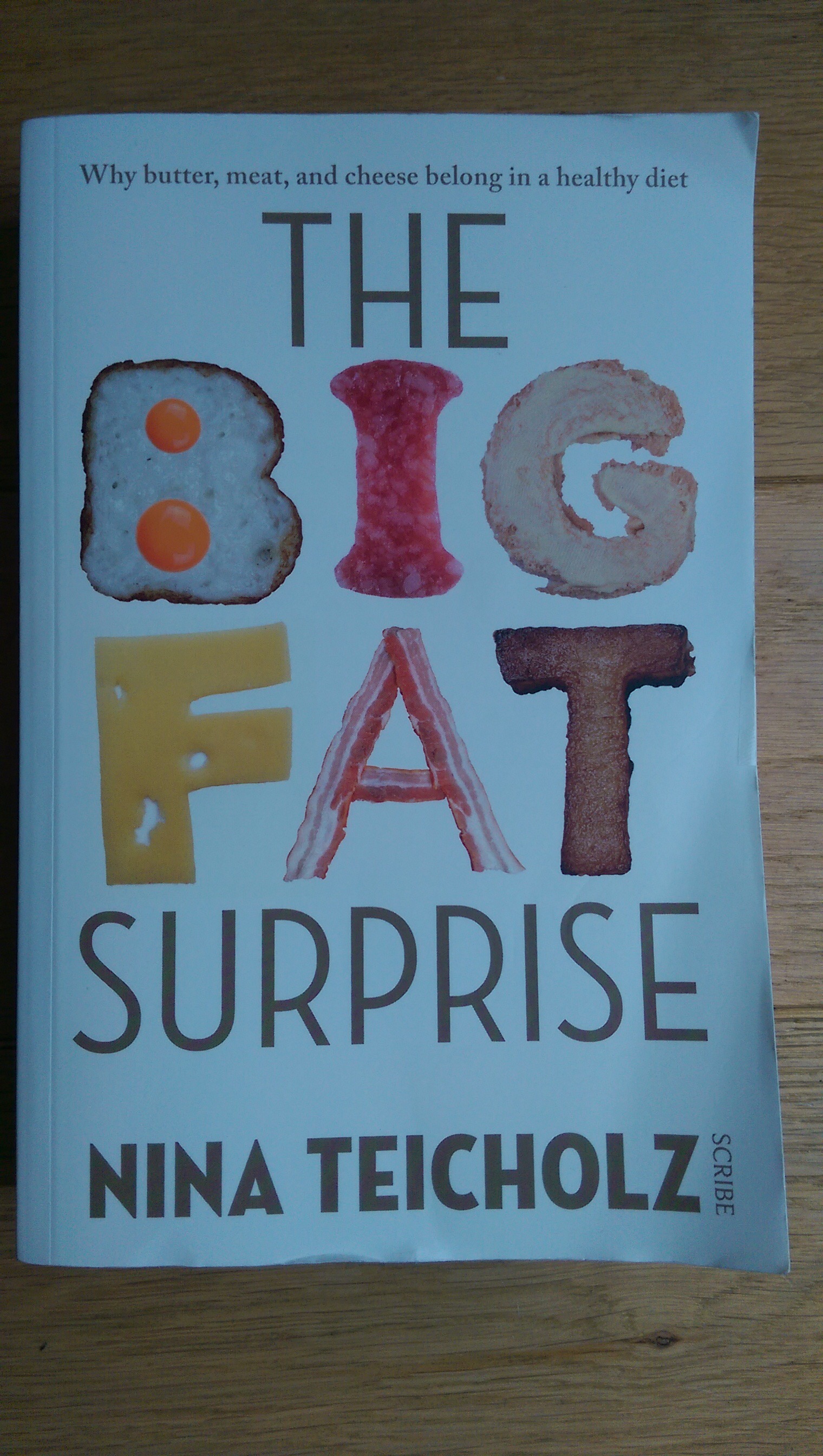
I have just finished Nina Teicholz’s The Big Fat Surprise a book that sets out to explain how the official dietary advice was developed and by who, what the evidence for it was (or wasn’t) and why it has been so very wrong.


Starting with Ancel Keys and his heart-diet hypothesis she works through the twists and turns of nutrition research and advice from the 1950s to the modern day. She references everything and has interviewed as many people as she can. It is an excellent book by an award winning science journalist. I was particularly pleased she referenced TL Cleave (see an earlier post). 
In her final chapter she explains how the last 60 years have been a huge experiment on the western world with disasterous results that we are now exporting to the developing nations with equally devastating consequences. How saturated fat is good for us and vegetable seed oils are far from good for us. TL Cleave said the same thing in the 1960s. She makes links to ancestral health and Weston A Price and the modern primal movement and finally, bravely and wonderfully, says Dr Atkins was probably right.

But I always knew that anyway.

Great book, well written. Thoroughly recommended. 

The Politics of Sugar Part 2

For the second time in six months, the UK government appears to be sitting on a report that questions (as far as we know) whether we should substantially decrease the amount of sugar in our diet.

image

Now I have no particular insight into why any government would want to hold up a report that may help people improve their health and lose weight. Maybe the politician responsible has noticed a problem with the research methodology or that some of the scientific evidence is unreliable. Or maybe something else is going on but in the week where we “celebrated” the first ever World Obesity Day, I think our politicians ought to be doing more, doing it better and doing it quicker.

http://www.worldobesity.org/what-we-do/action-initiative/aiprogrammes/world-obesity-day/

Insulin, insulin, insulin.

The more I study my interest in paleo, the more I hit up against insulin and the more I read about insulin and its implication in so many disease states, the more I am convinced that the over-production of insulin is  villain in the piece. I am also convinced that it is the abandonment of an a genetically optimal way of life that causes this over -production or hyperinsulinaemia.

I find it compelling that my clients, being the group that they are, often exhibit the disease states that may have an insulin component, whether it be high blood pressure, metabolic syndrome or simple straight forward obesity. When I think about what they tell me about their families I see yet more insulin implicated conditions. Remember, you can consume far too much carbohydrate and not be fat and you can have normal fasting blood glucose and still have hyperinsulinaemia.

If you are not sure what an excess of insulin over a long period of time could do to your health, here is a post from Tuit Nutrition. It may make you think about changing your breakfast cornflakes for bacon and eggs.

http://www.tuitnutrition.com/2015/09/its-the-insulin-2.html#more

Type 2 diabetes used to be a disease of late middle-age 

Now it appears that three year olds can develop it…

http://www.theguardian.com/society/2015/sep/16/type-2-diabetes-three-year-old-girl-obesity
Interestingly, the doctor says (I assume it was the doctor) that the child’s diet was high in calories and fat. Why is he talking about fat, which has no effect on insulin at all, and not making any mention of carbohydrates (especially sugar) which is most probably the cause of the diabetes.

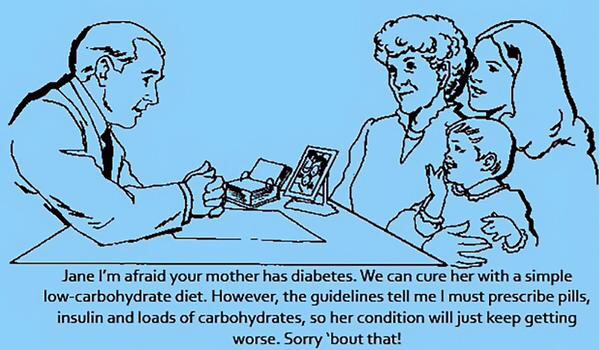
Anyway, I am glad the little girl is cured. Type 2 diabetes is a curable disease. With a hat tip to The Diet Doctor, here is a cartoon from Dr Ian Booth (The Banting Doctor!!) 

  
https://twitter.com/DrIanBooth/status/643264125271961600